
"wild coffee beans"
8000 article(s) found

Cat poop coffee bean species wild Robusta and captive Arabica milk bubble generator to be inserted
In 1880, the British brought coffee to Taiwan. After more than 100 years, Taiwan has had little visibility on the world coffee map, and coffee beans have not been Taiwan's main cash crop. But what is interesting is that Taiwan's coffee consumption has been growing year after year over the past decade or so. According to industry and official statistics, Taiwan imported 6800 metric tons of coffee beans in 2001.

Research says wild coffee beans will become extinct in the future if global warming continues
[global Science and Technology Comprehensive report] according to a report by Singapore's Lianhe Zaobao on September 4, the Australian Climate Research Institute pointed out in a newly released research report that if global warming continues on the current trajectory, wild coffee beans could become extinct by 2080. According to reports, researchers say that due to rising temperatures and rampant pests and fungi, it is estimated that the number of farmland suitable for growing coffee trees worldwide will decrease by 2050.
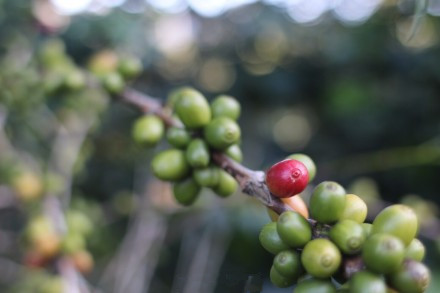
Ethiopian coffee the characteristics of Ethiopian coffee
The coffee tree originated in Ethiopia, which was originally a wild plant here, and the name coffee comes from the Ethiopian town of Kaffa. Humans may have known how to grow coffee trees as early as the 9th century. Coffee producing area in Ethiopia: many coffee trees in Ethiopia are still wild plants, and the coffee grown on this coffee tree is full of grains.

Boutique coffee common sense Ethiopian coffee
The coffee tree originated in Ethiopia, which was originally a wild plant here, and the name coffee comes from the Ethiopian town of Kaffa. Humans may have known how to grow coffee trees as early as the 9th century. Coffee producing area in Ethiopia: many coffee trees in Ethiopia are still wild plants, and the coffee grown on this coffee tree is full of grains.

What is Kopi Luwak Indonesia PWN Gold Manning Wild Muscat Coffee how does it taste
Production area: Aceh planting altitude: 1850 m above sea level: Tibica soil species: volcanic soil classification standard: G1 treatment method: civet intestinal probiotics and glands natural treatment harvest method: artificial harvest annual average temperature / rainfall: average annual temperature / rainfall: average 26 ℃ / about 1780 mm 3175 mm flavor: rich and round sweet taste incomparable to other coffee beans, such as honey, chocolate sweet

Ethiopian coffee producing area Ethiopian coffee elegant demeanor Ethiopian coffee special
The coffee tree originated in Ethiopia, which was originally a wild plant here, and the name coffee comes from the Ethiopian town of Kaffa. Humans may have known how to grow coffee trees as early as the 9th century. Coffee producing area in Ethiopia: many coffee trees in Ethiopia are still wild plants, and the coffee grown on this coffee tree is full of grains.

Wild flavor Ethiopian coffee bean varieties taste manor production area treatment method grinding engraving degree introduction
Ethiopian Coffee Bean Variety Taste Manor Regional treatment Grinding scale introduces Ethiopian Sidamo is a type of single origin that grows in Arabica coffee in Ethiopia's Sidamo province. Like coffee in most African countries, Ethiopian Sidamo is characterized by small gray beans, but characterized by its rich, spicy, wine or chocolate-like taste and floral aroma.

Coffee producing area in Ethiopia details Ethiopian coffee
The coffee tree originated in Ethiopia, which was originally a wild plant here, and the name coffee comes from the Ethiopian town of Kaffa. Humans may have known how to grow coffee trees as early as the 9th century. Coffee producing area in Ethiopia: many coffee trees in Ethiopia are still wild plants, and the coffee grown on this coffee tree is full of grains.

Global Coffee producing area-Ethiopian Coffee Market
The coffee tree originated in Ethiopia, which was originally a wild plant here, and the name coffee comes from the Ethiopian town of Kaffa. Humans may have known how to grow coffee trees as early as the 9th century. Coffee producing area in Ethiopia: many coffee trees in Ethiopia are still wild plants, and the coffee grown on this coffee tree is full of grains.
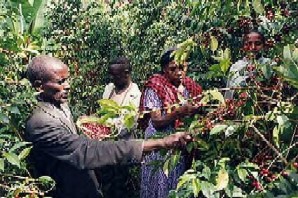
World boutique Coffee Manor beans: Yega Snow Flavor (part two) Wild Flavor in Ethiopia
[product name]: Ethiopia Ethiopia Yirgacheffe [quality rating]: WP Grade 2 [baking]: recommended moderate baking (Medium Roast or City Roast) [grade]: excellent [granule]: ★ full [acidity]: ★★★★ slightly sour, dark chocolate aftertaste [balance]: ★★★★ is very stable

Civet Coffee-should not drink coffee Indonesian civet coffee production process exposure how to drink?
Professional coffee knowledge exchange more coffee bean information please pay attention to the coffee workshop (Wechat official account cafe_style) objective introduction of Kopi Luwak Yunnan Kopi Luwak of China introduced civet coffee (cat dung beans, Kopi Luwak) have not drunk, also do not intend to drink, so whether it is good or not really do not know, but this kind of beans, which is contrary to my aesthetics, I absolutely do not drink.

The hidden secret of the world's most expensive coffee
Would you like to drink coffee made from animal waste? This lovely tropical mammal has a unique ability: its excrement is the source of the world's most expensive coffee. In addition, many civets do not have access to clean water or communicate with other partners. For these nocturnal animals, they have to endure traffic and tourists during the day.

Does Kopi Luwak taste good? What's that smell? How to flush cat shit? Do you have an inside story?
Does Kopi Luwak taste good? What's that smell? How to flush cat shit? Do you have an inside story? Civet Coffee, also known as Kopi Luwak, is made from beans excreted by civets after eating coffee cherries. In addition to the high price, is there another reason to reject civet coffee? Investigators visited many civet coffee farms and villages in Indonesia and the Philippines. Indonesia and

Twelve famous high-quality coffee producers in Ethiopia
The coffee tree originated in Ethiopia, which was originally a wild plant here, and the name coffee comes from the Ethiopian town of Kaffa. Humans may have known how to grow coffee trees as early as the 9th century. Coffee producing area in Ethiopia: many coffee trees in Ethiopia are still wild plants, and the coffee grown on this coffee tree is full of grains.

Indonesia Bali boutique gold Manning coffee flavor taste introduction Bali coffee price
In the international market, Luwak coffee has always been a veritable luxury. One of the main reasons is that it is not people but wild animals that make this kind of coffee. Traditionally, the coffee fruit is washed or sun-treated, removing the skin, pulp and sheep skin, and finally taking out the coffee beans, but Luwak coffee is made by natural fermentation in wild animals. Besides
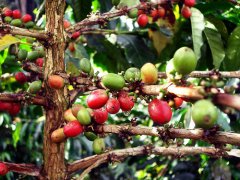
Wild berry flavor Kenyan coffee boutique coffee beans
Kenya AA (Kenya AA) has strong acidity, strong mellowness, smooth taste and slight aroma of Tangy sharp acidity, full body, smooth mildly winey flavor, well balanced. Kenya is located in the south of Ethiopia and Yemen, only hundreds of kilometers away from the two world-famous coffee producers. The vast majority of Kenya
Coffee News Why Coffee Is Dangerous
Stunning Solitude At a cafe in Turrialba, Costa Rica, guests stand on the restaurant balcony overlooking the lush hills opposite, and drink only white water or pineapple juice instead. This is March 2014, when about 20 people gathered at the Tropical Agricultural Research and Higher Education Center (CATIE) in Turiarva, including some of the world's top

Introduction to the requirements of natural conditions in the growth process of wild coffee
Introduction to the requirements of natural conditions in the growth process of wild coffee in fact, the Arabs began to grow coffee in 525 BC, and chewing fried coffee beans became popular in the Arab region. In 890 AD, Arab merchants sold coffee beans to Yemen, and Yemenis made coffee beans into drinks for the first time. In the 15th century, coffee was introduced into Europe and Asia, and soon into the United States.

Ethiopian boutique coffee introduces the characteristics of Ethiopian coffee Ethiopian coffee
The coffee tree originated in Ethiopia, which was originally a wild plant here, and the name coffee comes from the Ethiopian town of Kaffa. Humans may have known how to grow coffee trees as early as the 9th century. Coffee producing area in Ethiopia: many coffee trees in Ethiopia are still wild plants, and the coffee grown on this coffee tree is full of grains.